

Storm Tracking
looking for a brick in a sand pile

I feared the intense summer storms at my grandparents’ cottage. I also loved watching them blow in. The gray ominous clouds gathering. The wind picking up. The waves stirring. Or becoming eerily calm. The temperatures dropping. The smell of rain, that I still struggle to describe. The way it activated the scent of pine trees and sap. There was nothing more exciting than the view from the window of lightning bolts dancing across the sky just above the surface of the lake. Counting the seconds between those flashes and loud claps of thunder.
But my favorite part of a storm was when it was over. Going outside again felt like entering a whole new world. I’d walk around to see what was different. What changed. What the storm left behind.
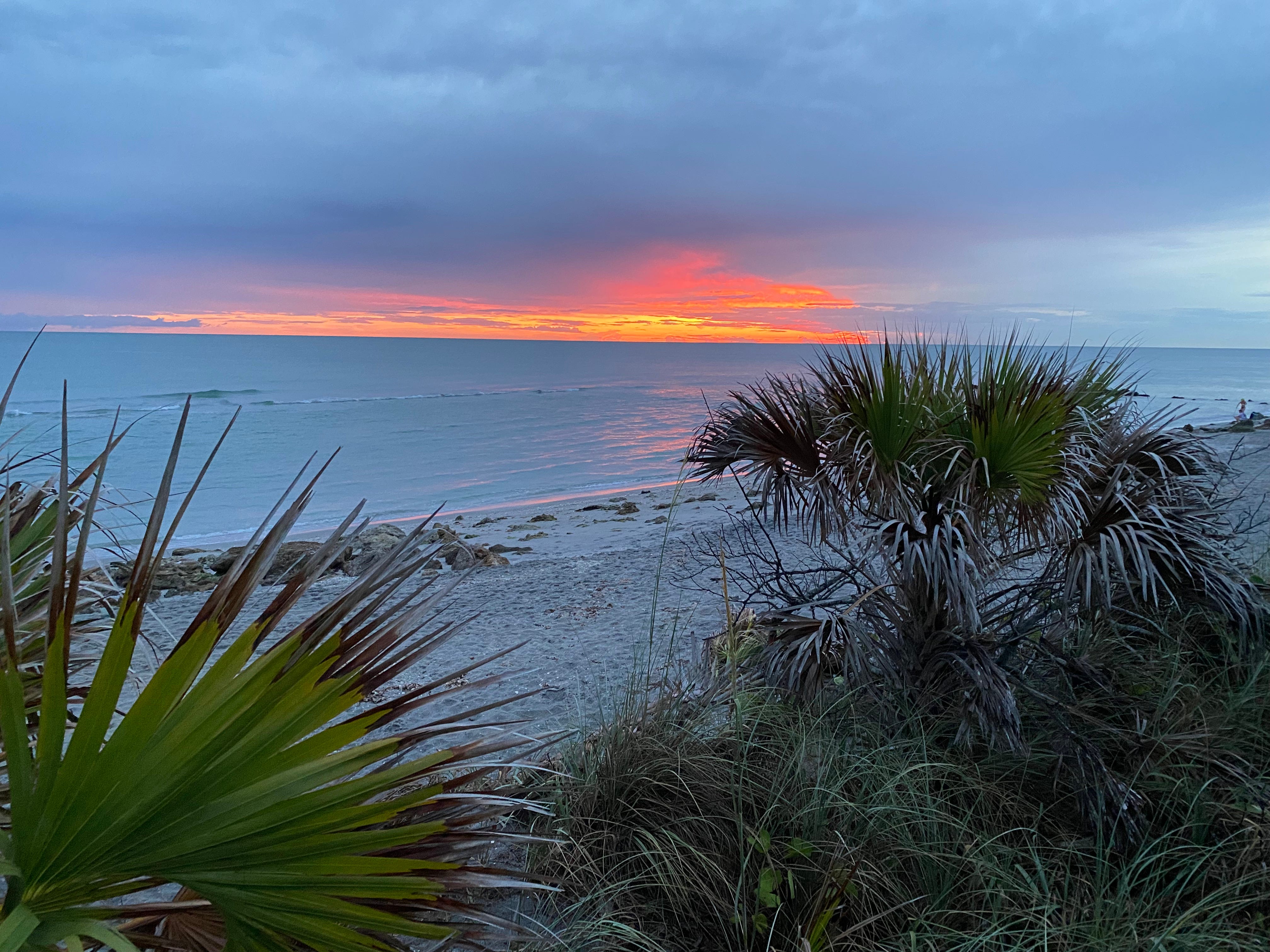
My grandmother’s hymnal was full of songs about storms and how to navigate them. Comparing life’s ups and downs to calm and stormy seas. God to a lighthouse and a safe harbor. Faith to a vessel strong enough to survive any turbulent waters.
It wasn’t until I was in my teens that I started to think more deeply about the source and purpose of storms. Were they more than weather? Did god send them as punishment, test or trial? To teach us a valuable lesson we couldn’t learn any other way? How can god be the one who saves us from the same storms they created? That doesn’t seem right. Or fair. Or logical. Or kind.
My thoughts on literal and metaphorical storms have been in flux for a long time. Living through Hurricane Ian in the fall of 2022 brought them to the forefront.
The poem Storm Tracking (included in Not My Grandmother’s Hymnal) was written right before Ian made landfall. Birthed from a conversation I had with a man who wanted me to join him in praying the storm would hit somewhere besides our town.
He insisted, “we don’t deserve what’s heading this way!”
He became enraged when I asked, “you think other people do?”
While Ian was ravaging the Gulf Coast of Florida, I was alone with my dog on the bathroom floor of my condo. I also had a horrible case of Covid. No power. No phone or Wi-Fi signal. In hindsight, I’m kind of glad I didn’t know how bad it really was.
I sang old hymns to keep myself calm and distracted. Many were those stormy songs I learned as a child. They were familiar and comforting. Yet the more I sang, the more I realized they reflected beliefs I no longer held. They belonged to a faith that was no longer mine.
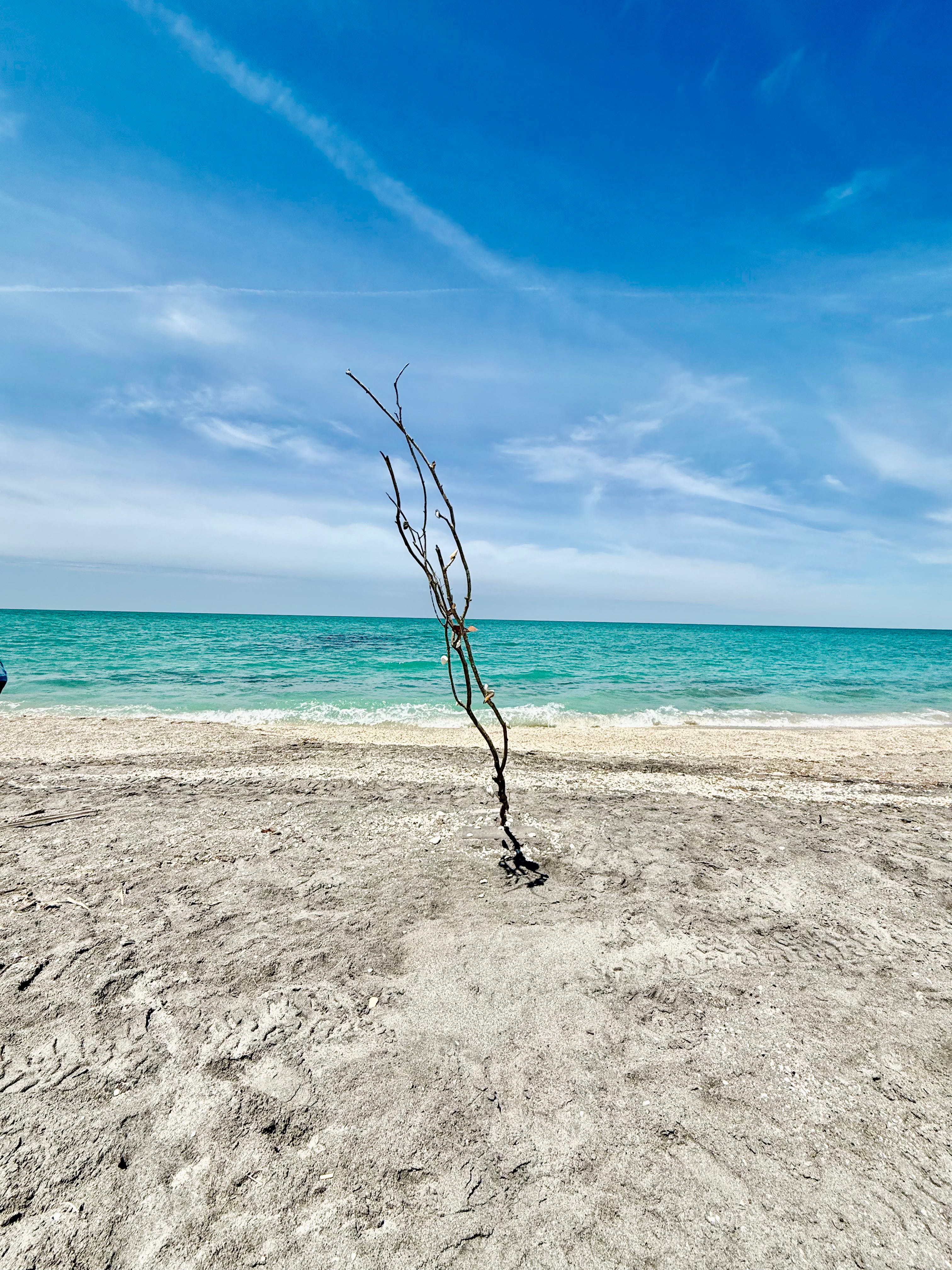
There’s a beach in Venice, Florida that’s really special to me. During the pandemic I went there after working remotely all day for fresh air and freedom. It was secluded enough to be safe and also a spot where I wasn’t completely isolated. I floated in the waves, walked on the trails, watched birds, dolphins, and sunsets. Wrote poems.
This beach was severely impacted by Ian and then again by Hurricanes Helene and Milton in 2024. Last year when I visited, the entrance was completely closed. This year it was open only to foot traffic.
The road I once drove in on was barely visible. After a few hundred feet it vanished completely. Those storms changed everything. Dunes, trees, plants, flowers all gone. The shoreline unrecognizable. Benches and boardwalks washed away. The parking lot filled with piles of broken concrete.
More than a decade ago, as a Christmas present for my mother, I participated in a community fundraiser by purchasing a brick. It was engraved with her parents’ names. Long before I ever visited this part of Florida, decades before my mother and I found one another, her mom and dad found peace and rest (and lots of shark teeth) at this beach. I never met my mother’s parents, but I feel a deep spiritual connection with them. Their lives, their faith, their stories influence mine as much as those of my biological circle of grandparents.
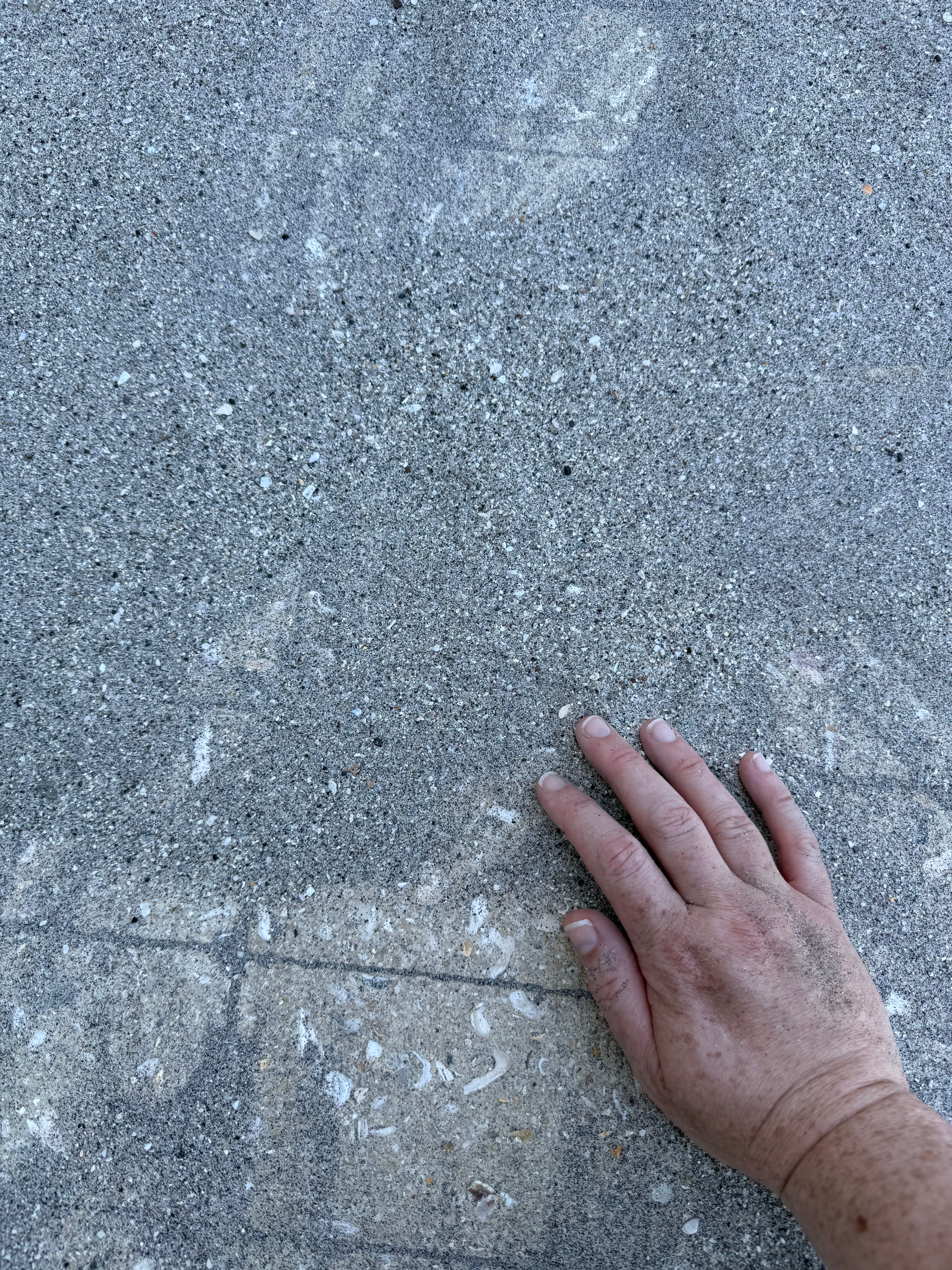
I ventured through the hot sun and sand in search of that brick. I feared it was lost in the storm, but wanted to know for sure. I made my way to where it once was. The whole area covered in thick layers of sand and shells. I bent down and began sweeping it away with my hands. More than one person stopped to awkwardly ask if I was okay. I assured them I was fine, just looking for something I hoped the storms left behind.
Right when I was about to give up, I found it. A little worse for wear, a few scrapes and scratches, but it was there. So many storms, so much change, yet they survived. We survived. I survived. My faith—though radically different—survived.
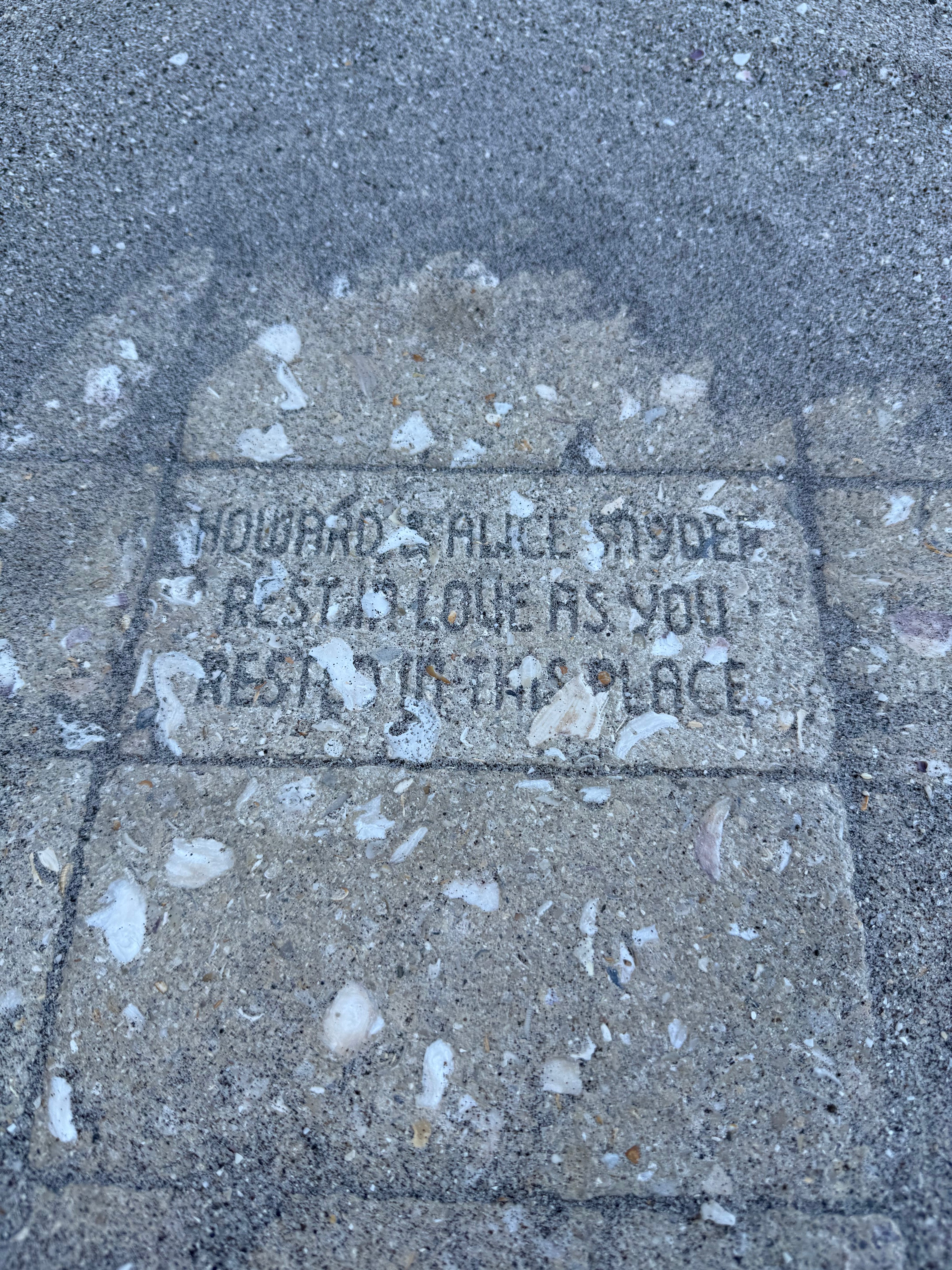
I lost track of time sitting there with the brick. Sipping cool water. Getting sand in my eyes as I wiped away salty tears. Remembering life’s storms and what they leave behind. Singing the hymns my grandparents passed down in a voice that is uniquely my own. Composing a faith that is far more curious than certain about hurricanes and all the winds that blow our way.
Have you lived through a storm?
What story do you have to tell about it?
Curiously yours, Rebecca
This Friday for paid subscribers to Wednesdays at the Well, I’ll share a reading of the poem Storm Tracking. If you’d like to support this work and receive bonus posts, this is your personal invitation to become a paid subscriber for a little as $5/month.
Also, over the summer I plan to share more origin stories—like this one—about some of the poems in Not My Grandmother’s Hymnal. I have a few picked out AND I would love to know what poem(s) in the book stir your curiosity. Comment below or send me a message to tell me the poems you want to know more about. If you haven’t ordered your copy yet, there’s one waiting for you here.
I am weeping reading this. The brick was a precious gift. “Remembering life’s storms and what they leave behind.” Is a powerful quote. I’ve lived through many storms in life and we take those memories with us. I’m glad to be riding these waves with you.
Wow. What an absolutely beautiful story. With an ending that feels a bit like a miracle. Thank you, Rebecca.