

Deep Listening
how 6 poems became a hymnal

Shortly before signing a publishing contract for Unraveling: Coming Out and Back Together, I shared an idea of launching a poetry show, New Laces in Old Shoes, with a friend. 6 poems interspersed with stories and conversation. Much to my surprise, the show took off. Taking on a life of its own.
There were times when I wondered if it was a mistake to have the book and poetry show come out so close together. What if they were both one hit wonders?
For a host of reasons, I wrestled with whether or not I really wanted to publish another book and if so, what would it be? More poetry? A memoir? That novel I’ve been working on for years?
Once I decided I did want to continue this author life, the initial plan was for the next book to be shaped by the poems of New Laces in Old Shoes. I played around with several ideas for how 6 poems could become a whole project. The more I worked on that manuscript, the less confident I became in where it was leading. I knew those 6 poems were part of it, but would they define it? I told myself to keep on writing and revising, and trusting that the details would come to light.
And they did.
Not My Grandmother’s Hymnal came to me last spring as I walked toward Haystack Rock in Cannon Beach, Oregon, where iconic scenes from The Goonies were filmed. (Read more about that adventure here.) Sitting on a long piece of driftwood, holding Unraveling and a souvenir treasure map, the hymnal was born. I returned home with a clear vision and a renewed commitment to making it real.
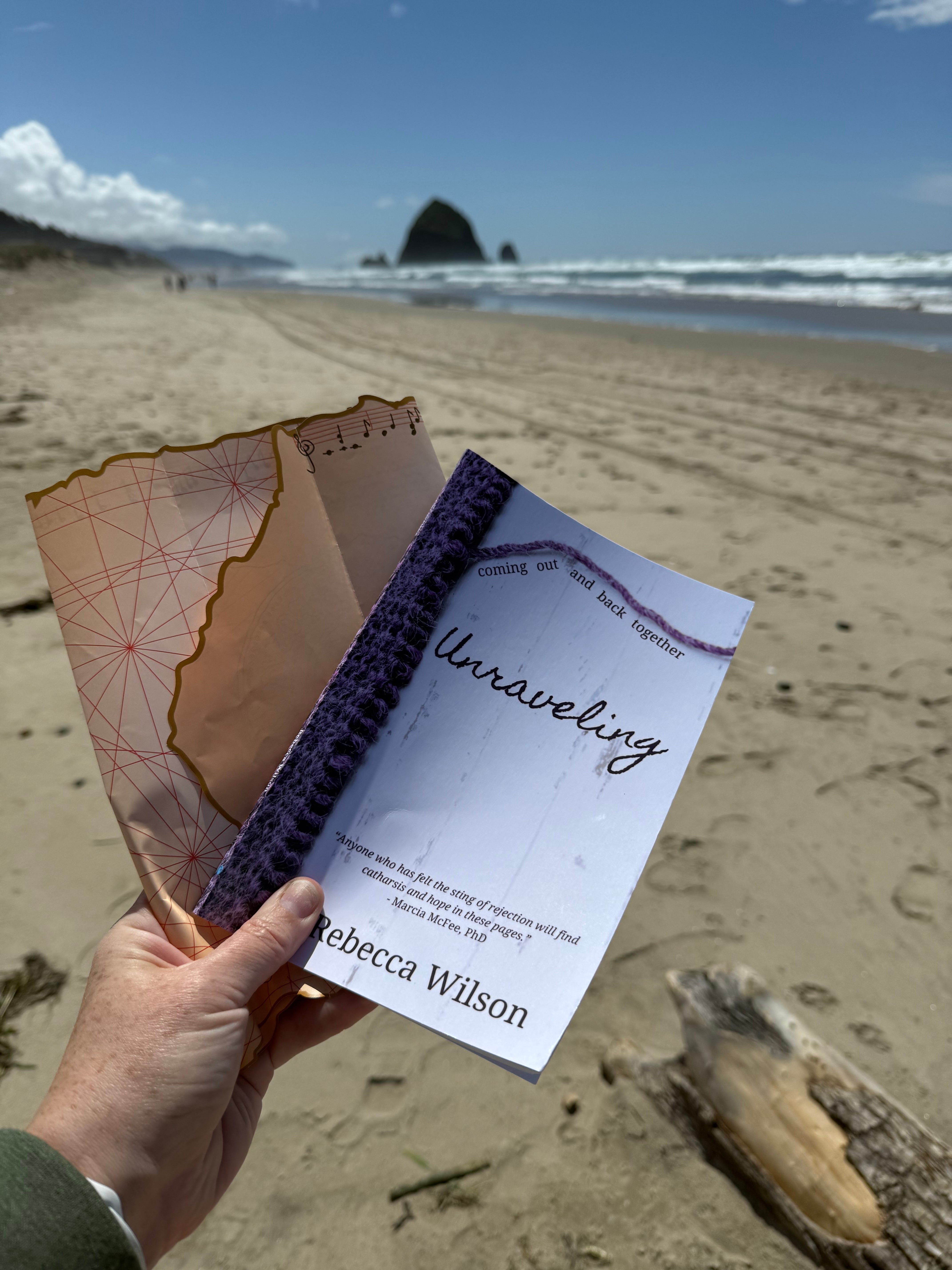
During my training last summer with The Good Listening Project to become a certified listener poet, I was introduced to the work of *Pauline Oliveros, composer, performer, and humanitarian. From her fascination with sound that began in childhood, she brought deep listening to the surface. While Oliveros was a musical teacher, she offers a universal invitation to attunement, to being in harmony and alignment with ourselves and with creation.
Oliveros explained, “When I am composing, the sounds are leading me to the way I want them to organize.” I engaged this wisdom when putting together Not My Grandmother’s Hymnal.
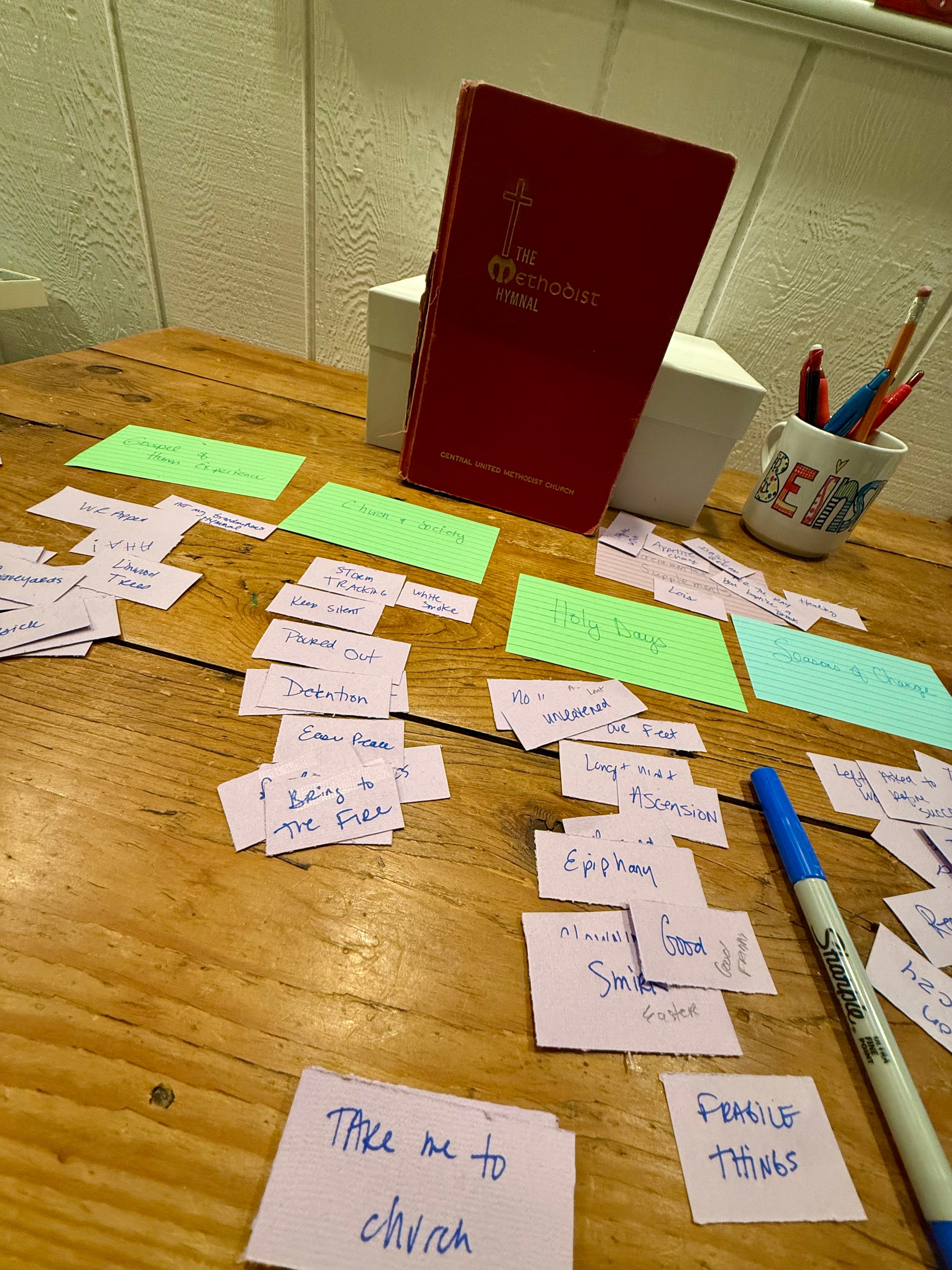
With those 6 poems from the show laid out on the floor, I sang to them and spoke to them. And I listened to them deeply. It was the listening that turned them into a hymnal. I took those poems and pulled out themes, topics, questions, and curiosities. Then I began combing through journals, notebooks, pieces of paper, piles of pages, pains, and promises in search of more poems that would resonate and create a meaningful score.
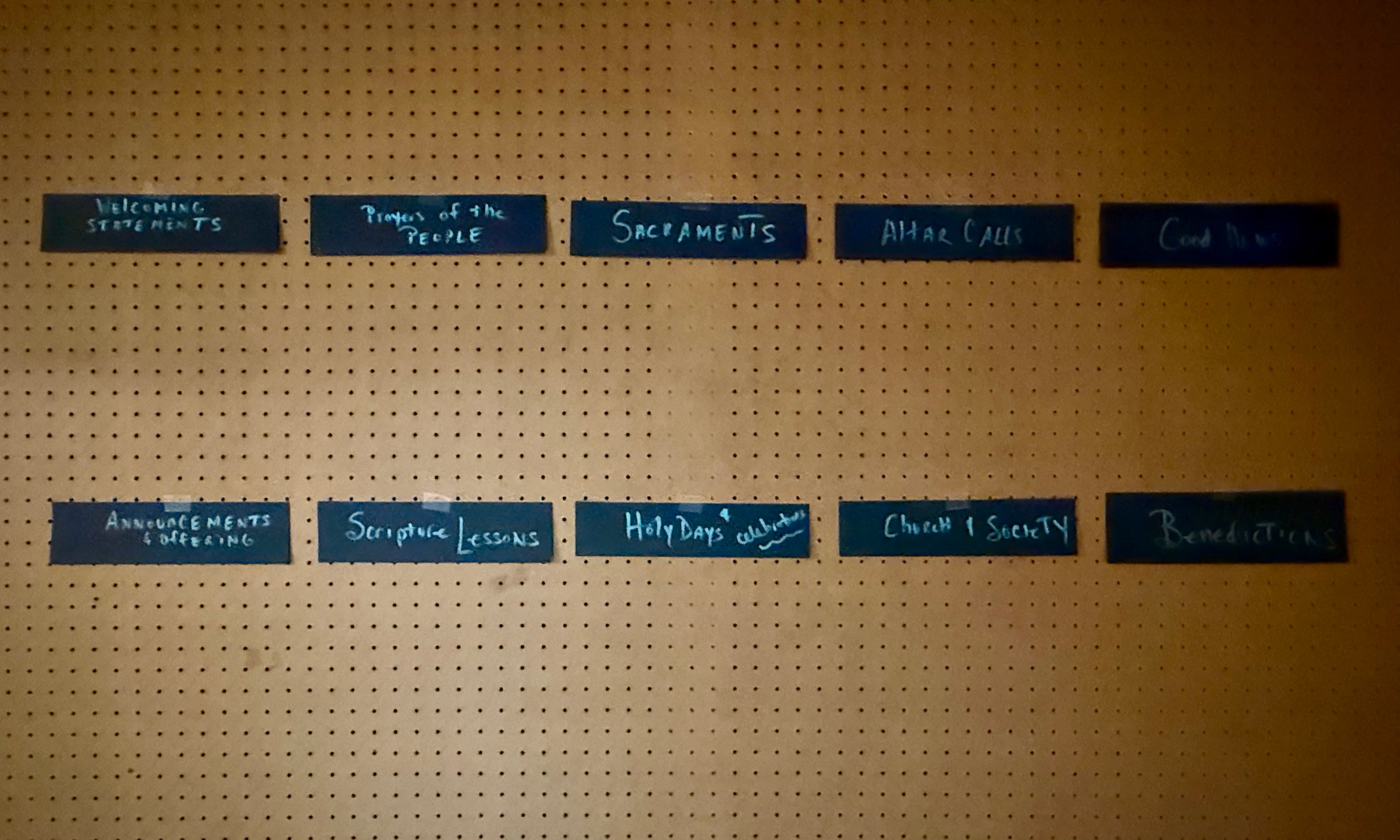
At one point over 100 poems were auditioning for a place in the hymnal. I created 10 categories and pinned them to an old pegboard wall in the basement. Moving those 100 poems around like notes on a staff. Checking pitch and rhythm and meter. Those 10 categories blurred into 5 sections and those 100 poems blended into 67.
Listening deeply to the poems meant allowing myself to remember the emotions and to feel the experiences within them, sorrow and joy, oppression and liberation. Listening deeply required me to tenderly hold those lines in my heart that still need healing and to release the shame that kept me silent about the brokenness that’s being made whole. Listening deeply pushed me to consider not only what I want to offer, but also what you long to hear.
Listening, I was reminded that many of the poems were written as prayers or birthed while praying. The working title for Section 2 of Not My Grandmother’s Hymnal was Prayers of the People. Like my faith, my understanding of prayer continues to evolve. More and more it looks and sounds and feels like listening. Listening to my heartbeat and to how it is syncs with the pulse of others and the world.
Growing up in church, I always anticipated the time of prayer during worship. Eagerly and inquisitively waiting to hear what prayers the people would offer. Expecting prayers that were both personal and communal. Hearing gratitude and grief, relief and resignation. Recognizing the prayers that were repeated week and week. Wondering about the ones never voiced again. Always struck when the minister acknowledged the prayers so fresh and too raw to be spoken. My first poems began as scribbles on the back of prayer cards held in the pew pocket that also held the hymnals.
Pauline Oliveros instructed, “Take a walk at night. Walk so silently that the bottoms of your feet become ears.”
My great-grandparents’ cottage on the lake up north is the first place I walked alone at night, listening to the water and the starlit sky with bare feet in the sand.
Singing from my grandmother’s hymnal is where I first learned the ways that songs become prayers and how praying is more than repetitive requests.
The poems of Not My Grandmother’s Hymnal echo what I heard and felt while listening deeply to the whispers and curiosities within and around me.
What does it mean to walk at night?
Is it a physical and/or spiritual act?
When was the last time you deeply listened?
What did you feel?
Tenderly, Rebecca
Now that you know more about the first two sections of Not My Grandmother’s Hymnal, are you ready to pre-order your signed copy? Pre-orders, with special bonus gifts, will end March 6th. Simply click the button below to get yours today.
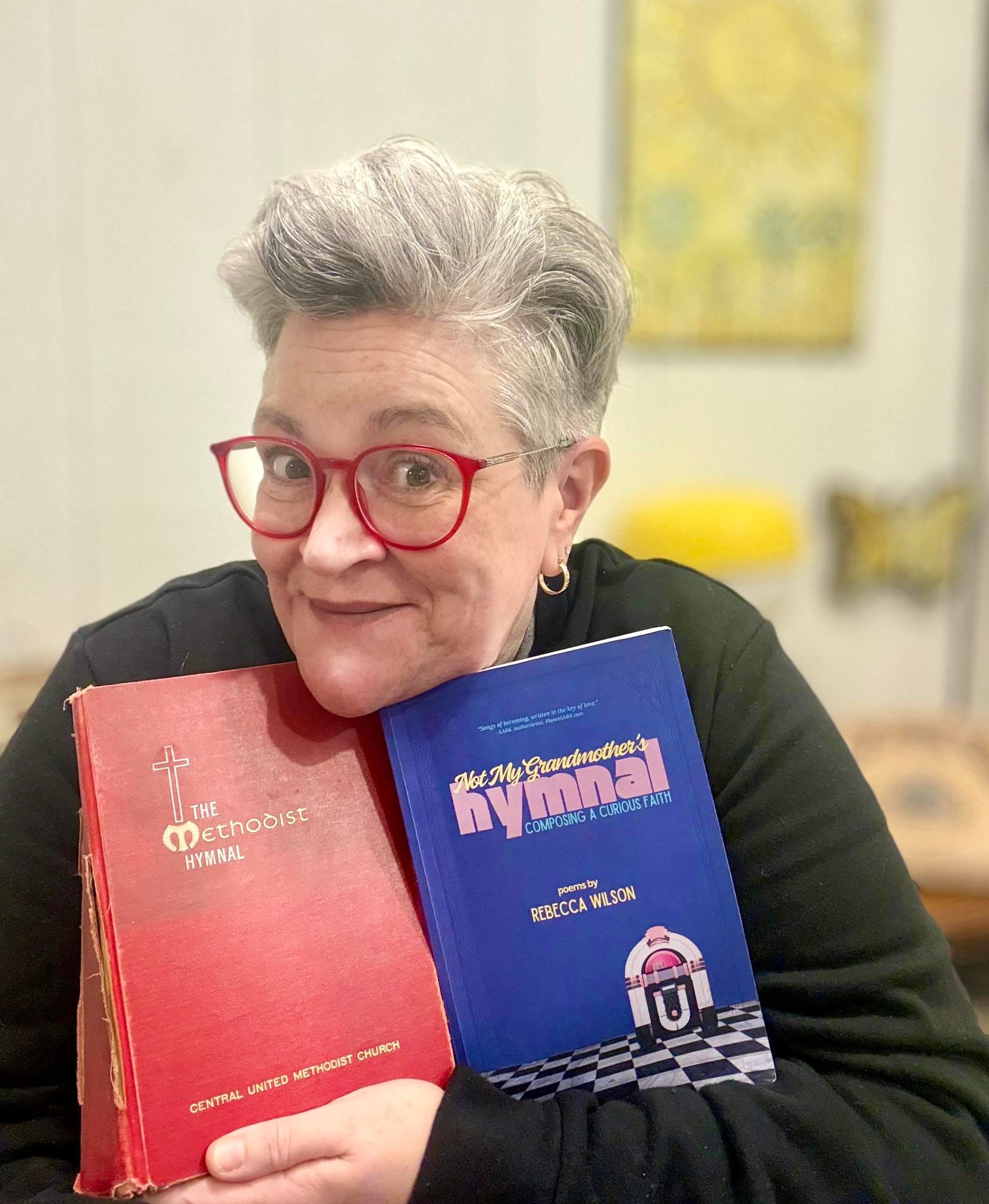
Thanks to everyone who has pre-ordered copies already.
I can’t wait to get your signed books in the mail!
*Learn more about Pauline Oliveros at www.deeplistening.rpi.edu.
Congratulations! And, thank you for being willing to share your life!
I was raised in the same tradition as you, and I know well the hymnal that you hold in the picture and the one that came after it - the 'new' one that was published in 1989. As I get older and see the world more widely, I hear voices that are missing. Thank you for lighting a path for me.